
Essential Guide to Garage Door Safety Sensor Functionality and Care
When your garage door refuses to close or keeps reversing unexpectedly, the culprit is often a problem with your garage door safety sensor. These small devices near the bottom of your door opening play a critical role in protecting your family, pets, and vehicles. This guide covers everything Murrieta homeowners need to know—from quick fixes you can try right now to understanding when it’s time to call Old Town Garage Door Repair for professional service.
Quick Answer: What To Do When Your Garage Door Safety Sensor Stops Working
If your garage door won’t close and you suspect sensor issues, this section gives you the fast help you need. Most sensor problems in Murrieta homes can be traced to a handful of common causes that you can check in just a few minutes.
Here’s your quick checklist to work through:
Remove obstructions – Look for trash cans, bikes, garden tools, or boxes crossing the beam path near the floor
Wipe the sensor lenses – Use a soft cloth to clean dust, spider webs, or debris from both sensor faces
Check both LED lights – Verify the sending sensor shows a steady light (usually amber) and the receiving sensor shows solid green
Gently re-aim sensors – If lights are blinking, loosen mounting brackets slightly and adjust until LEDs go solid
Test the door – Press your remote and confirm the door closes smoothly without reversing
On most garage door opener models, you can temporarily close the door by pressing and holding the wall button until the door reaches the ground. This bypasses the sensor circuit, but only use this method when you can clearly see the entire path is clear of people, pets, and objects.
Stop DIY immediately if you notice a burning smell, sparking near wires, melted insulation, or if the door appears crooked in the tracks. These signs indicate electrical or mechanical problems that require professional residential garage door repair attention.
Old Town Garage Door Repair provides same-day and emergency service throughout Murrieta, Temecula, Wildomar, Lake Elsinore, Menifee, and Corona. If your door is stuck open overnight or you’re facing a safety concern, we offer 24/7 emergency help to get your home secure.
What Is a Garage Door Safety Sensor and Why It Matters
Garage door sensors, also known as photo-eye sensors, are small devices located near the bottom of the garage door tracks. These sensors work by sending an invisible infrared beam from one sensor to another. If something blocks the beam, the door will stop closing and reverse to prevent accidents. Garage door sensors are typically mounted on each side of the door, about six inches off the ground.
The terms “safety sensors,” “photo-eyes,” and “reversing sensors” all refer to the same infrared devices installed near the bottom of your garage door tracks. You’ll find one sensor on each side of the door opening, working together as a protective system.
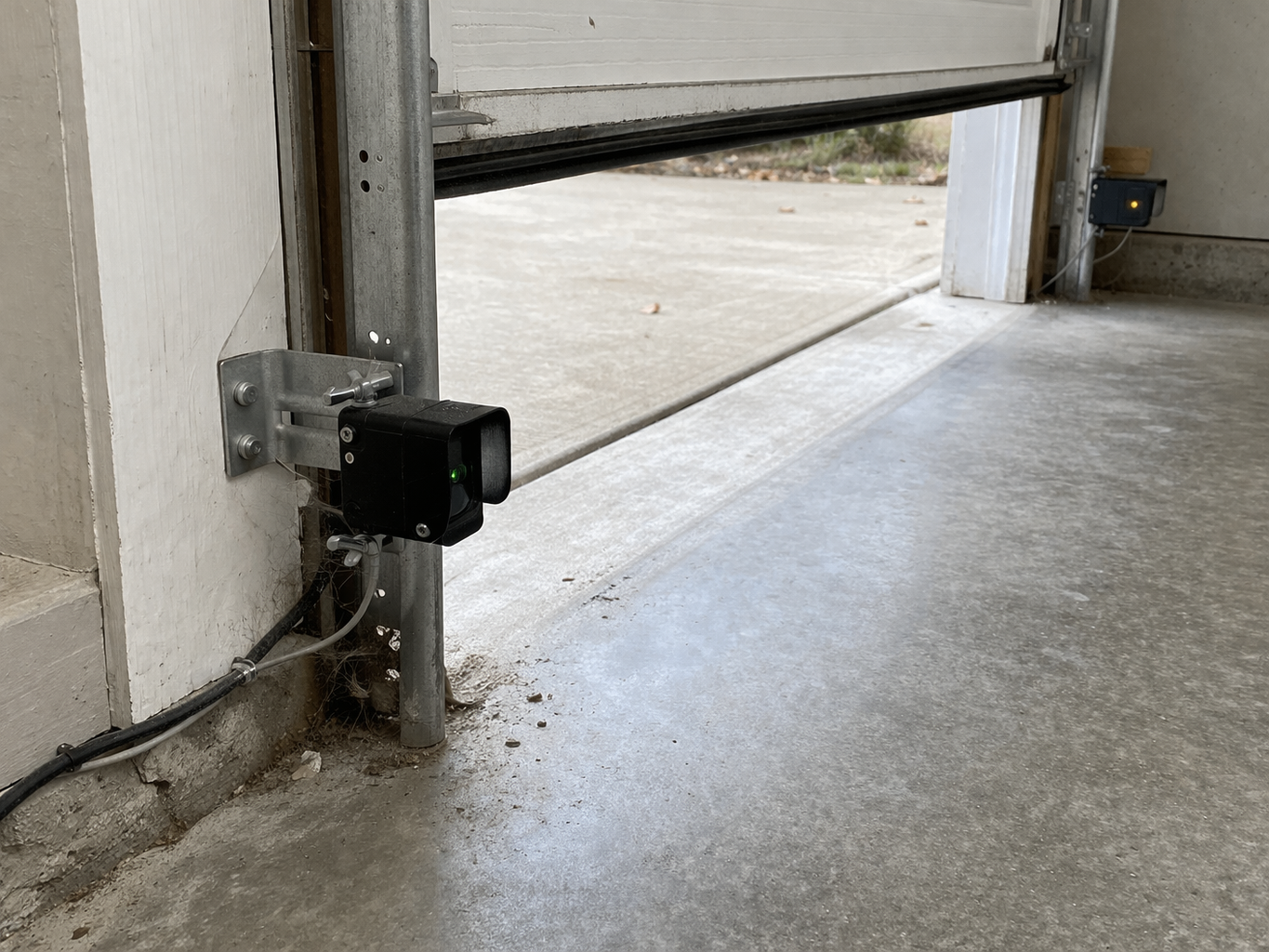
Their purpose is straightforward: to stop and reverse the door if a child, pet, car bumper, or any object interrupts the invisible infrared beam during closing. Without working sensors, a heavy automatic garage door could cause serious injury or damage.
Key facts about garage door safety sensors:
| Feature | Typical Specification |
|---|---|
| Mounting Height | 4–6 inches above the floor |
| Beam Type | Invisible infrared beam |
| Sensor Pair | One transmitter (sending), one receiver (detecting) |
| LED Indicators | Amber/yellow on sender, green on receiver |
The low mounting height ensures the system can detect obstructions like car tires, children’s toys, and small pets. One sensor sends the infrared beam while the other receives it, and the opener’s logic board constantly monitors this signal. If the beam is broken during a closing cycle, the opener immediately stops and reverses the door.
On most modern openers, each sensor has an indicator light to show power and alignment status. If you have a garage door opener from the late 1990s or newer in California, these sensors came installed as standard equipment.
Safety Rules & History: Why Sensors Are Now Required
Garage door safety regulations exist today because of tragic incidents in the 1980s when children were injured or killed by automatic doors closing on them. The industry and government responded with increasingly strict requirements.
Here’s how the safety standards evolved:
1990 – The Consumer Product Safety Improvement Act required automatic garage doors to reverse when hitting an obstruction, effective January 1991
1993 – UL 325 standards mandated that all newly manufactured openers include monitored safety sensors (photo-eyes) to prevent entrapment
Present Day – California building codes require any opener replacement to include properly installed sensors that meet current UL 325 standards
Before these regulations took effect, the Consumer Product Safety Commission documented roughly 54 deaths and 37 serious injuries among children under 15 from garage door entrapment between 1982 and 1992. After mandatory compliance with UL 325, entrapment incidents dropped by more than 50%.
For today’s homeowners, sensors aren’t an optional accessory—they’re a critical, code-compliant safety feature that protects your family, vehicles, and pets. Disabling or bypassing them can expose you to serious legal liability if someone is injured.
How Garage Door Safety Sensors Work (In Plain English)
Understanding how your sensors function doesn’t require an engineering degree. Think of it as an invisible tripwire running between two sensor heads across your door opening.
The sending sensor (transmitter) continuously emits an invisible infrared beam aimed at the receiving sensor on the opposite side. When the beam reaches the receiver without interruption and the opener’s other safety checks pass, the system allows the door to close on command.
When the beam is interrupted while the door is closing—whether by a person, pet, or object—the opener immediately stops the door and reverses it to the fully open position. This happens within about two seconds of detection.
What the sensor lights tell you:
| LED Status | What It Means |
|---|---|
| Both lights solid | Sensors aligned, system working properly |
| Receiving light blinking | Misalignment or blocked beam |
| One or both lights off | Power or wiring problem |
| Lights dim or flickering | Weak connection or marginal alignment |
Some newer garage door systems include additional safety technology like pressure sensors in the opener or edge sensors on commercial doors, but the basic photo-eyes remain the core protective device on most Murrieta homes.
Common Signs Your Garage Door Safety Sensors Have a Problem
Recognizing garage door sensor problems early helps you address them before they become safety concerns. Watch for these symptoms:
Primary warning signs:
Door won’t close from the remote or keypad
Door starts moving down, then immediately reverses
Opener motor light flashes repeatedly (often 10 times) after a close attempt
One or both sensor LED lights are blinking or completely dark
Wall button behavior clues:
Door only closes if you press and hold the wall control continuously
Single tap of wall button causes motor to run briefly, then stop with lights flashing
Door closes normally from wall button but won’t respond to remote
If the door closes when you hold the wall button but won’t close from the remote, this typically points to sensor issues rather than a bad remote battery. The wall button press-and-hold function bypasses the safety circuit, which is why it still works.
Intermittent problems to watch for:
Works fine in the morning but fails in bright afternoon sun (sunlight interference)
Only fails on windy days (vibration knocking sensors out of alignment)
Random reversals with no visible obstruction (marginal wire connection)
Whenever you notice these symptoms, visually inspect the area around your sensors. Look for toys, bikes, trash cans, yard tools, or extension cords that may have drifted into the beam path.
Step-by-Step DIY Troubleshooting for Garage Door Safety Sensors
Before starting any troubleshooting, keep these safety guidelines in mind:
Stay clear of moving parts while the door operates
Don’t remove covers from the opener motor head
Disconnect power immediately if you see exposed or damaged wiring
Never work under a door that’s not fully open and secured
These basic steps can resolve most sensor issues that Murrieta homeowners encounter. Follow them in order before calling for professional repair.
Troubleshooting sequence:
Clear all obstructions from the beam path
Clean both sensor lenses
Check LED indicator lights on both units
Realign sensors if lights are blinking
Inspect mounting brackets for looseness
Visually check wiring from ground level
Never tape sensors pointing in random directions or leave them dangling from their wires. This creates intermittent failures and unsafe operation that puts your family at risk.
If sensor LEDs won’t illuminate at all after completing these checks, the problem likely involves wiring, the opener’s logic board, or the sensors themselves. In that case, a more detailed guide on what to do when garage door safety sensors aren’t working can help you understand the repair options and when to call a pro. These situations typically need professional diagnosis.
Checking for Obstructions and Cleaning the Sensor Lenses
Dirty lenses and blocked paths cause more sensor failures than any other issue—and they’re the easiest problems to fix.
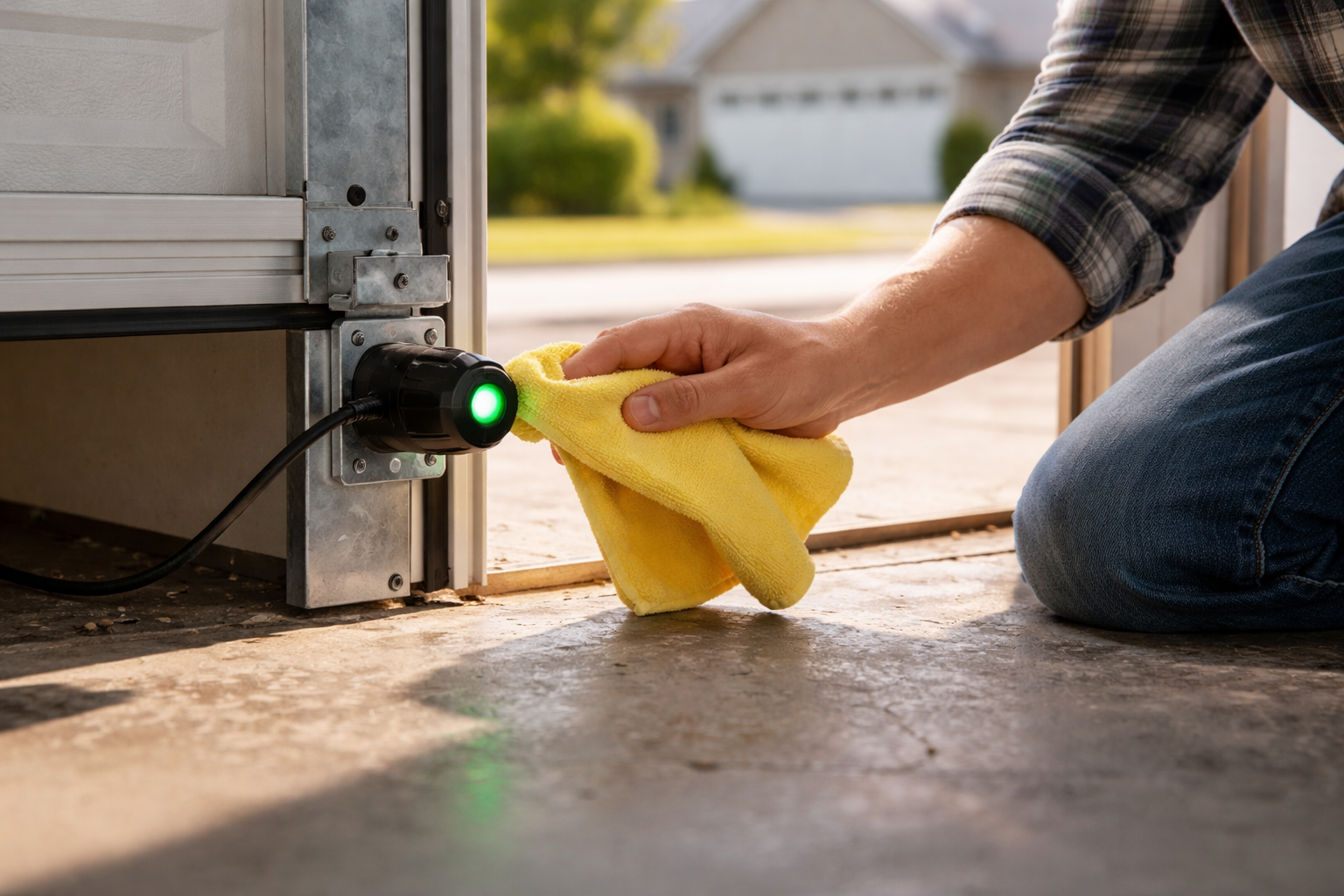
Clearing obstructions:
Remove items stored near the tracks: trash cans, storage bins, ladders, bikes
Check for extension cords, garden hoses, or tools that cross the beam path
Look for items that may have shifted or fallen near the sensor line
Cleaning the lenses:
Use a soft, lint-free cloth (microfiber works well)
Gently wipe both sensor faces
For stubborn grime, dampen the cloth with mild soap and water
Avoid abrasive cleaners or rough materials that can scratch the lens
In Murrieta-area garages, common debris includes dust, spider webs, dead insects, and leaves blown in during Santa Ana winds. The combination of desert dust and occasional high winds makes regular cleaning especially important in the Inland Empire.
After cleaning, test the door while watching the sensor lights. Both should remain solid without flickering during the entire closing cycle.
How to Realign Misaligned Safety Sensors
Minor bumps from trash cans, pets running by, or kids playing can easily knock sensors out of alignment. When sensors aren’t perfectly aligned, the beam can’t reach the receiver consistently.
Realignment steps:
Identify which sensor has a blinking light (usually the receiving sensor)
Loosen the mounting nut or wing nut just enough to allow the sensor to pivot
Point both sensors directly at each other at the same height
Slowly adjust the blinking sensor until its LED changes from blinking to solid
Tighten the bracket screws firmly once alignment is achieved
The key to lasting alignment is securing the brackets tightly after adjustment. Vibration from the garage door opening and closing can gradually shift loose sensors back out of position.
Test your work by opening and closing the door several times. Watch the LEDs during operation—they should remain solid green throughout each cycle.
Recognizing Wiring and Power Problems
When one or both sensor lights are completely off, the issue is usually related to wiring or power rather than simple misalignment.
Visual inspection checklist:
Follow low-voltage wires from sensors up the wall as far as safely reachable
Look for staples driven through wire insulation
Check for chewed or frayed sections (common with rodent activity)
Inspect any wire nuts or splices for disconnection
Stop immediately and call a professional if you see:
Melted or discolored wire insulation
Burning odor near wiring or opener
Exposed copper wire
Scorch marks on sensors or mounting surfaces
In older Murrieta homes with pre-wired garages, wire colors may not match the colors shown on the opener terminals. This makes DIY rewiring risky without a wiring diagram or multimeter.
If you spot visible damage, take phone pictures before calling Old Town Garage Door Repair. This documentation helps our technicians prepare the right materials and speeds up diagnosis during the service visit.
Advanced Fixes: When Cleaning and Realignment Aren’t Enough
When basic troubleshooting doesn’t solve the problem, the issue likely requires professional tools and expertise. Understanding what comes next helps you know what to expect from a service call.
Advanced diagnostic steps technicians perform:
Continuity testing of sensor wires with a multimeter
Voltage verification at sensor heads and opener terminals
Logic board input testing
Inspection of wire runs through walls and ceilings
Sometimes the problem lies in old splices or connections made during previous repairs or installations. Over years, these connections can corrode or break, requiring partial or complete re-wiring of the sensor circuit.
Intermittent failures are often the trickiest to diagnose. Causes may include:
Vibration loosening connections inside the wall
Moisture near the garage slab corroding wire ends
Rodent damage to sections of wire hidden from view
These advanced repairs are best handled by trained garage door technicians with proper tools, ladders, and safety training. Old Town Garage Door Repair technicians, who provide full residential garage door repair services in Murrieta, carry common replacement parts for major opener brands like LiftMaster, Chamberlain, and Genie on our service trucks, allowing same-day solutions for most sensor problems.
When It’s Time to Replace Your Safety Sensors
Sometimes cleaning, realignment, and even rewiring can’t restore a faulty sensor to reliable operation. Here are the signs that replacement is your best option:
Indicators that sensors need replacement:
Repeated misalignment even after tightening brackets firmly
LEDs that stay dim or flicker despite clean lenses
Physical cracks or damage to sensor housings
Sensors that work intermittently regardless of troubleshooting steps
Impact damage from a vehicle bumper or heavy object
Even if a sensor housing only looks slightly scuffed after being hit, internal components can be permanently damaged. The sensitive photodiode or LED emitter may malfunction under stress conditions like high heat or bright sun—both common in the Inland Empire.
Sensors from the early 2000s may simply have reached the end of their reliable service life. Heat, UV exposure, and general wear degrade electronic components over time.
Replacement recommendations:
Replace sensors in matched pairs from the same manufacturer
Avoid mixing brands or using generic substitutions
Ensure new sensors are compatible with your specific opener model
Professional replacement includes proper mounting at code-compliant height (no more than 6 inches from the floor), precise alignment, secure wiring connections, and full system testing including open/close cycles, force settings, and safety reversal verification.
Bypassing Garage Door Safety Sensors: Why It’s Risky
Let’s be direct: bypassing or defeating your garage door safety sensors is dangerous and not recommended. This is especially true in homes with children, elderly family members, or pets.
Some openers allow the door to close by pressing and holding the wall button continuously. This feature exists as an emergency override when you can clearly see the entire door’s path is completely clear. It’s not intended for regular use.
Methods people use to bypass sensors—and why they’re dangerous:
| Bypass Method | Risk |
|---|---|
| Taping sensors together | Removes beam detection entirely |
| Pointing sensors at a wall | Creates false “aligned” signal |
| Twisting wires to fool the opener | Complete safety system defeat |
Each of these removes the critical safety layer that prevents accidents and can expose you to serious injury or legal liability if someone is hurt.
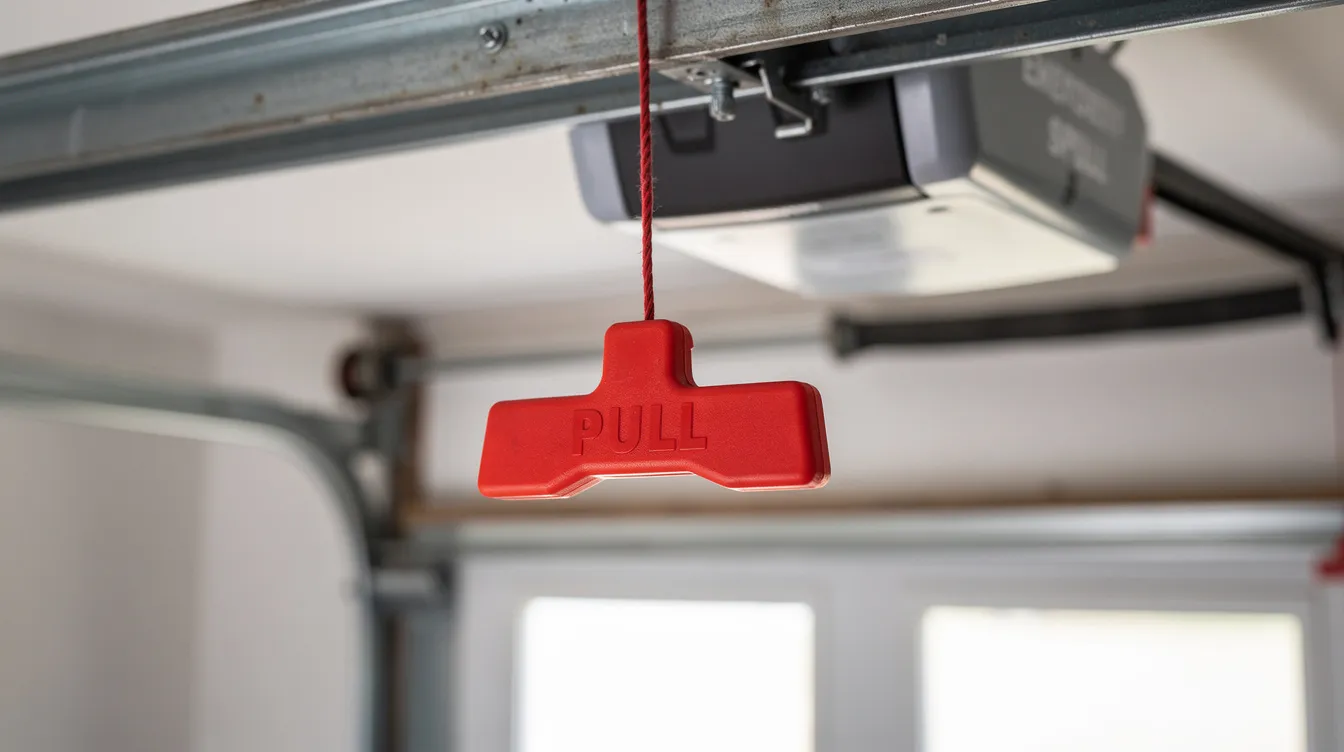
If your sensors are malfunctioning and you need to secure the door temporarily, switching to manual mode is safer than trying to trick the electronics. Pull the red emergency release cord, then lower the door by hand with the path completely clear.
Any need to repeatedly override your sensors signals that you should schedule a prompt repair—not develop a workaround. Old Town Garage Door Repair technicians restore full safety function and verify proper reversal operation before considering any job complete.
Safe Ways to Close Your Door Until a Technician Arrives
If you’re waiting for professional repair, here are safer alternatives to bypassing your sensors:
Press-and-hold method (temporary only):
Stand where you can watch the entire door path
Press and hold the wall button until the door closes completely
Never use this method when you can’t see the full opening
Only use in emergencies, not as a routine solution
Manual operation:
Pull the red emergency release handle with the door either fully closed or fully open (never partially open)
Lift the door manually using both hands on the bottom section
Keep fingers away from gaps between panels
Don’t attempt to move a door that feels extremely heavy or binds in the tracks
Securing the door overnight:
Use the built-in lock bar on the inside track (if your door has one)
Place an appropriate clamp on the track below the bottom roller
Ensure the door is fully closed before securing
Schedule emergency garage door repair service in Murrieta with Old Town Garage Door Repair rather than leaving your door disabled for extended periods. This is especially important if the garage serves as your primary home entry.
Preventive Maintenance Tips to Avoid Future Sensor Problems
A few minutes of seasonal maintenance can prevent most nuisance sensor failures and keep your garage door system operating reliably.
Regular maintenance checklist:
| Task | Frequency | Notes |
|---|---|---|
| Clean sensor lenses | Twice yearly (minimum) | More often during dusty/windy periods |
| Check LED status | Monthly | Quick visual confirmation both lights are solid |
| Inspect bracket tightness | Quarterly | Vibration loosens fasteners over time |
| Clear items from beam path | Ongoing | Keep storage several inches away from sensors |
| Test door reversal | Monthly | Place a 2x4 flat in door path; door should reverse on contact |
Murrieta homeowners should pay extra attention during Santa Ana wind season when dust and debris blow into garages more frequently. The combination of heat and airborne particles accelerates lens contamination.
Add a quick sensor check to any regular garage door maintenance you already perform, such as spring balance tests or lubrication of rollers and hinges. Following a comprehensive garage door maintenance checklist helps you catch problems early and prevents inconvenient failures.
Old Town Garage Door Repair includes a full sensor inspection and safety reversal test during annual garage door maintenance in Murrieta for homes throughout Murrieta and surrounding communities.
Why Call Old Town Garage Door Repair for Sensor & Safety Issues
While many sensor problems respond to basic troubleshooting, some situations call for professional expertise. Knowing when to call ensures your safety and prevents minor issues from becoming major repairs.
Contact Old Town Garage Door Repair when you experience:
Recurring sensor errors after cleaning and realignment
No LED lights on one or both sensors
Visible wiring damage or burn marks
Opener light flashing a fault code you can’t clear
A door that feels heavy, binds, or moves crookedly
Any safety concern you’re not comfortable addressing yourself
As a family-owned, veteran-operated business based in Murrieta, we prioritize safety, honest diagnostics, and using high-quality manufacturer-approved sensors and parts. We don’t cut corners on components that protect your family.
What sets our service apart:
24/7 emergency response for stuck-open doors
Same-day appointments throughout Murrieta, Temecula, Wildomar, Lake Elsinore, Menifee, and Corona
Clear, up-front pricing before work begins
Technicians trained to inspect the entire garage door system
Our technicians examine springs, cables, rollers, garage door tracks, opener, and sensors during every service call, addressing many of the signs you may need a garage door tune up. This comprehensive approach catches underlying issues that might otherwise go unnoticed until they cause a bigger problem.
Don’t let a malfunctioning sensor compromise your family’s safety or leave your garage vulnerable. Contact Old Town Garage Door Repair today to schedule a sensor inspection, repair, or new garage door installation or replacement in Murrieta. We’ll keep your door operating smoothly and safely year-round.